Showing posts with label South Africa. Show all posts

Thursday, September 22, 2011

Another New Painting...


So after painting something with far too much meaning in it, I decided to paint something with no meaning whatsoever and I quite like the results. I think i'll be painting with this style a lot more from now on. It's bright and happy and there's not too much to read into. Perhaps that's a good thing right now...

White Fronted Bee Eaters

Tuesday, September 20, 2011

When Paintings Have Too Much Meaning....


I like to keep my paintings happy and full of love, but sometimes it doesn't work that way! This is the first of the paintings I did in Africa. It started out as a nice painting of some dueting Black Collared Barbets- but then my heart got in the way (darn it!). Fortunately for me, no one else will be able to see the meaning in this one, and I kind of like the end result. It also documents a whole phase of my life perfectly- easier than writing in any journal...

Tuesday, March 22, 2011

Meaningless and Maladroit Manis Memoirs Chapter 66: A Midnight Meeting With Princess Mellivora


“Rolling down hills tonight are we?” The voice said, as it unstuck its claws from the Pangolin’s scales. “Aren’t you afraid someone will see you? Won’t you be terribly embarrassed?”

Manny was indeed terribly embarrassed, but he couldn’t go red. He was a sort of light yellowy-beige colour. Sometimes he wished he was bright purple, but it would make for poor camouflage. Still, he felt bright purple suited him. He once found a bright purple plastic container that a fertogafer left behind. He cherished it, and when no one was looking he would sing songs to it.

“Um… hi Princess Mellivora”, said the Pangolin. From the other creature’s deep, sniffly, irritating voice, and un-naturally long claws he already knew who he was speaking to, but he had to look up at the big, brutish Honey Badger to confirm it. No one knew why he was called 'Princess Mellivora', but knew that the badger had chosen his name for himself. The animals of the Kalahari doubted that Princess Mellivora knew what the word 'Princess' meant, but no one dared to bring up the subject.

Princess Mellivora was a honey badger, and true to his reputation, he rarely stopped for anything. If he couldn’t eat it, or collect it, it generally wasn’t worth his time and he’d abandon it for something else. He always travelled with his minions- a pair of Pale Chanting Goshwaks named Min and Ion. They pursued any prey that Princess Mellivora missed, so that nothing ever got away. Princess Mellivora approached everything and feared nothing. He probably knew the Kalahari with its many trails and its inhabitants better than anyone else. He certainly knew how to get the lost Pangolin home. He was incredibly smart.

He didn’t allow fertogafers to see this side of him, but not only was he was pretty handy with a swiss army knife, but he understood the inner workings of a laptop computer and could start his own fires when he was cold. Being nomadic, he had few possessions, but those he had, he carried with him in a small yellow backback with the words ‘Build-a-Bear’ on it. He had stolen it from a juvenile fertogafer. It was always strapped to the back of one of his minion goshawks, causing it to fly most awkwardly, not unlike a spooked Black Korhaan. Princess Mellivora was the only animal in the Kalahari who had his own iPod- obviously raided from a fortogafer tent. Tent zippers were no mystery either. And when no one was looking, he’d sometimes creep into the reception area at Nossob and mess with the bookings on the computer, just for the fun of it. Double booked chalets made his day, as did cancelling the shop’s weekly pie orders.

The Honey Badger knew Manny and his family quite well. In exchange for information about secret Cape Fox den locations, he left the small pangolin family alone and promised not to eat them.

The Honey Badger didn’t admit it, but pangolin really was the one thing he just couldn’t bear to eat. Something about a pangolin’s long tongue just didn’t sit well in the badger’s tummy, or in his mind. This was most confounding considering he loved to eat truck tires, braai tongs and toilet paper. And he had a fondness for sticking bird feathers onto porcupine quills and dipping them into the mud puddles on the road. He called it ‘Princess Melliovra’s specialty feather fondue’. He wasn’t creative and he had very poor taste.

“Well, you’re a long way from home” noted the big, scary honey badger. “Yeah... lions… don’t ask” replied Manny.

The pangolin wasn’t particularly afraid of the honey badger, but he certainly felt uneasy in its presence. He couldn’t bear to think of Cape Foxes.

“Um… would you be able to point me in the right direction?” Manny asked nervously.

“Sure… but you’re going to have to do a little something in return”. Princess Mellivora signalled his minions. The goshawk with the little yellow backpack approached Manny, with a nasty but broken, and extremely tired glaze over its eyes. ‘Those poor birds aren’t even nocturnal…’ Manny thought to himself.

The goshawk shrugged off the little yellow backpack and dropped it in front of the Pangolin. “Open it” ordered Princess Mellivora.


Thursday, March 10, 2011

A Life in Pancakes: Pancakes in Africa

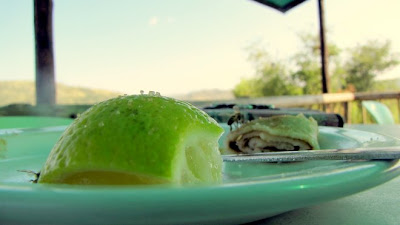
Pancakes in Africa were amazing. Like, really, really AMAZING. Africa is an absolute hotbed of pancake diversity. Anything and everything is considered suitable to roll into a pancake. Truly an eye-opening and life-changing experience..

1. I fist tried cinnamon sugar pancakes at a church function in 2008. I was very reluctant, but the smell itself convinced me that this was in fact, the way forward. It’s very simple to mix a little cinnamon into some sugar, so I can’t understand why the rest of the world hasn’t caught on to this yet.

2. My favourite place to eat cinnamon pancakes is in Pilanesburg National Park. The restaurant in the middle of the reserve allows to you eat two cinnamon pancakes with either cream or ice cream, surrounded by hornbills, monkeys, go-away birds, giraffes, warthogs, etc and all for just R12. And you get the wasps for free!

3. The above restaurant has the best pancake eating atmosphere imaginable, but terribly questionable service and quality. It takes a great deal wrong for me to send something back to the kitchen, but this place manages it regularly. Pancakes are often raw to the point of oozing batter or they don’t come with lemons. Explaining these things always involves taking a walk, because the table service is non-existent . But it’s still a winning situation. The longer you sit and wait, the longer you get to be there...

4. There’s a place at Hartebeespoort Dam called ‘Pick-a-Pancake’. It’s in the middle of a dusty, touristy market and they will put anything on a pancake. The place is love.

5. Pick-a-Pancake even makes a biltong pancake, which is only unfortunate insofar as I once had to watch a friend eat one. This pancake happens when one sprinkles raw, dried shavings of kudu and warthog onto a pancake. Not quite right, but if it brings someone joy…

6. On the flipside, the worst pancakes in Africa come from a chain of sickly ice cream shops called ‘Milky Lane’. Here, the pancakes are sugary and plasticy and the toppings are not right. On the plus side, Milky Lane for me holds lots of fantastic memories of small children doing very fun things with food- like wearing an ice cream cone, or mixing Smarties and chocolate ice cream and bits of waffle into a bright green glass of cream soda. LOVE.

7. My favourite pancake eating experience was probably Christmas 2008, when a friend had been sent some genuine American Blueberry Pancake mix from the USA. Our pancakes were topped with icing sugar. Happy happy happy...

8. I met and made a lifelong friend at Skukuza Camp in Kruger, when the two of us were trying to outbid each other on some maple syrup in a silent auction.

9. The best place I’ve ever cooked pancakes is definitely at a campsite at Addo Elephant Park.

Next up: Pancakes of Today...

Monday, February 28, 2011

My Latest Kiva Loan: Meet Ntombikayise

Tonight I made my second Kiva loan!

I’ve been desperate to loan to a South African entrepreneur, but until now I’ve been holding back for a number of reasons- all of them related to concerns I have with the only Kiva MFI working in South Africa. But more about that later…

First, meet Ntombikayise! Here’s her description from Kiva:

"Ntombikayise is 47 years old and married with 7 children between the ages of 10 and 33. She sells mats house to house in Mtubatuba, Kwazulu Natal in South Africa. She is wearing a black and white head scarf in the photo above.

She's been in this business for 10 years. She also earns income from the government's child support grant. She says that the main challenge to her business is that her customers do not pay on time.

She requested this loan through Women’s Development Businesses to buy material for making mats. She says that the extra income from this loan will help her send her children to school. In the future, she would like to see herself being a mats supplier."

I chose Ntombikayise over a handful of other South African loans for a few reasons. Obviously, the biggest reason being that I like the direction she is taking. She has a brilliant business idea and she crafts things (mats) which are both useful and beautiful. There are also some more personal reasons why Ntombikayise was the one:

1. I love mats. They’re very pretty and simple and functional. A few years ago I camped in Mozambique and froze quite terribly in the night. The next night, I was kindly loaned a traditional mat, which kept me warm and toasty. Here’s to many more nights being kept warm and toasty by a mat. Mats are love.

2. There’s a beautiful Zulu film I’ve watched about 12 times called, ‘Izulu Lami’. It’s about an orphaned girl and her little brother who travel to Durban to sell the last mat their mother made. Lots of awful things happen to her, but she discovers her love of craft and starts making the most enchanting things from junk she finds on the beach. It’s a little like flip flop art and she sells it to a high-end craft gallery in the city. This loan sort of reminded me of that.

3. Ntombikayise lives in one of the most beautiful places in South Africa. Her town, Mtubatuba, is remote and surrounded by nature reserves, including St. Lucia. I believe that people who live in beautiful places are inspired to create beautiful things.

4. Mtubatuba is incredibly fun to say! Just try it. It’s awesome.

5. She’s using some of the loan to pay school fees. South African school fees are extremely unfair. Even the poorest parents sending their children to the lowest quality school must pay school fees. And buy uniforms. Knowing I’ve helped someone just a little with this burden brings me comfort.

6. Her main challenge is that her customers don’t pay her in a timely manner. This is a real South African business ethic fail. “Yeah, I’ll pay you now-now. We’ll make a plan”. Ntombikayise has both hair and a smile. I would have neither if I had to operate a business in this environment. Love and respect.

Finally, a note about the MFI. I mentioned that I had some reservations with them. But this time, I’ve decided to loan anyway. I’ve put aside my worries and put some faith in them instead. Here are my reasons.

‘Womens Development Businesses (WDB)’, is a brand new MFI to Kiva, and they still have a ‘pilot’ status. Recently, I read a great article about what they’re trying to achieve and I think they’re worth the risk. Empowering and giving opportunities to rural women is kudutastic.

Here’s a little info from Kiva about the KZN based MFI:

"The core business of WDB MF is making credit accessible and available to rural women who are the poorest of the poor.

The strategic drivers of WDB MF are to:


• Disburse loans to poor rural women using a relationship based methodology, on a professional basis with the aim of supporting their self-development activities and improving the quality of life in their families
• Build women’s financial knowledge and business skills, through participation in the credit scheme
• Support technical, managerial, leadership and other skills, through training to enhance women’s income generating activities and productivity
• Strengthen community and women’s organizations and services by working with them in offering credit, training and technical assistance
• Support, assist and conduct research programmes which are necessary for the viability of projects and women’s advancement as a whole
• Share knowledge, expertise, experiences and information through coordinating with women’s and development groups and producing accessible and relevant material"

So I wish Ntombikayise all my love and happiness and I hope that this loan will provide her with everything she needs it to.

Izulu Lami:

Wednesday, February 23, 2011

Egg Insurance Policies


This is a lovely video presented by Richard Dawkins trying to be Attenborough. Cool guy. Thumbs up. But not Attenborough.

It introduces a very kudutastic concept in nature: The Egg Insurance Policy.

The Nazca Boobies in this video lay their two eggs so that one baby hatches five days before the other one. It has a good opportunity to establish itself and if it fails, then the new egg will take over. If birdlet #1 succeeds, its little brother or sister will hatch into the world and find themselves face to face with a big, bad bully who isn't prepared to share its parents. Mom and dad don't step in to help their younger child when it's being killed by their oldest, because they have successfully passed on their genes, so everything is fine.

The Blue Footed Booby essentially does the same thing, but more passively. The older chick isn't as jealous, but it's still unwilling to share its food. Often its little brother or sister starves to death.

In both of these cases, both chicks are allowed to hatch. This makes sense. It maximizes the chances that the parents will raise at least one healthy chick.

The Wattled Crane in South Africa is another bird that takes out an egg insurance policy by laying two eggs when it only plans on taking care of one little Crane. Mother Crane lays her eggs two days apart and begins incubating as soon as the first is laid, which insures that one chick will be born two days ahead of the other.

But as soon as the first chick is born, Mom quickly leads it away from the nest and abandons the second egg two days before its due date. Huh?

This doesn't make as much sense to me. Could she not wait just two more days before moving? Birdlet mortality rates can be high and what if something happens to the chick she's led away? Then she would have wasted the energy involved in laying two eggs and has no children to show for it. But at the same time, this must be a reasonably successful practice, or it wouldn't happen. Nature knows best.

Life is love.


Monday, February 21, 2011

Meaningless and Maladroit Manis Memoirs Chapter 64: The Most Awkward Silence

(This is Part 4/4. Really should be read after the other parts and not before...)

“Do tell me you haven’t kicked that poor Pangolin all the way here?” quizzed Larry when he saw the girls approaching. Embarrassed, they stopped immediately.

Larry gazed at the ball like someone who had ordered a plate of pancakes, and had been given pancakes… bright blue pancakes. You know you could eat them, but you aren’t going to.

“So… can it be eaten?” Lois asked tentatively. “Would you eat bright blue pancakes?” Larry asked Lois. Lois didn’t understand the nature of the question and didn’t know what a pancake was. “Um… so… no, then? But you know what it is?” Lois asked.

“It’s a Pangolin! Young one, by the looks of it. Very rare in these parts” said Larry. “How does it eat?” asked Lois, examining the ball for any holes. “It won’t need any skin cream, will it? Leona inquired hopefully.

“No no, it doesn’t always look like this. It’s wrapped itself into a ball. There’s a standard-issue mammal in there somewhere”. “Oooh” Lois was intrigued, “can you…open it?”

“Why bother?” said Larry. “The little chap can stay like that for days. Waste of time if you ask me. Besides, there aren’t many of those around, it’s best if we leave it so it can have children one day”. “Ew, children. I think not!”, Manny thought to himself from deep within the ball. For just a brief moment he considered uncurling himself and smacking the lion on the nose, but thought better of it.

Larry lowered his voice. “Fertogafers eat these, given the chance”. The three girls gasped in horror. From what the girls had seen, fertogafers only ate things that came wrapped in little plastic packages. Larry had their attention. “Oh yeah, they do all sorts of ridiculous things to them as well. Eat them, wear them, use them as medicine. Personally, I can’t see how this would work better than Med-Lemon.” This sent a wave of panic over the tightly rolled ball. Its mother hadn’t told it this, despite the fact it was an only child and its mother most definitely had the time. So this must be why ‘YOU MUSN’T BE SEEN!’

Feeling that it was in a safe space, the ball decided it was time to break its silence. “Excuse me, so does this mean you’re not going to eat me?” it asked the lion. Only it sounded much like, ‘Skeewwmeeee, Sofudis meee Voo-naa-gna-eeeee?’, as the ball’s words were impossibly muffled by its scales. “You can give up the ball act”, Larry assured. A tiny, pointed mouth emerged from the ball and spoke. “You really won’t eat me?” “Promise” said the lion, holding up a paw. He didn’t know why he did this, and lowered before anyone noticed. “Don’t flatter yourself, you don’t even look that tasty.”

Slowly the pangolin unravelled itself, revealing its funny form. Lois couldn’t help but giggle at the weird creature. Larry shot her a nasty look and she quickly composed herself. Lisa suddenly sprang to her feet. “The whale will FALL if I don’t collect 37 cucumbers by 4 o’clock!” and with that, she bolted across the dunes and out of sight. The other lions weren’t going to see her again until three days later, and when they did, she would be inexplicably covered in blue and red polka-dots.

“You’re free to go”, Larry said to the little Pangolin. “You know your way home from here?” The Pangolin had a good look around, or at least it pretended to. In reality, it was quite blind and couldn’t see beyond the grains of sand by its feet. It looked the large lion square in the eye (or what it thought was the lion’s eye- it was however the lion’s third claw on its left foot), and spoke with confidence. “Yeah, sure”, it said, trying to sound relaxed and cool. The truth was, it could easily spend the next 5 years trying to find its burrow, but it wasn’t going to. It wanted its mummy.

“Er… do you mind if I stay here until nightfall?... I musn’t been seen” it added quickly, remembering fertogafers aren’t nocturnal. The lions agreed. The pangolin looked at his new companions. They looked at him. What do you say to a Pangoin? Time passed. A lot of time passed. “I think its staring at our toes”, exclaimed Lois. More time passed. The lions were stumped and so began the longest and most awkward silence ever not heard in Kgalagadi . Even the barking geckos joined in. By doing nothing.

It was very awkward.


Meaningless and Maladroit Manis Memoirs Chapter 63: Suffering Seasickness in the Riverbed

It might be best to read Chapter 61 and Chapter 62 before this. Or not.

“We’ll have to roll it to Larry”, decided Lois. “Are you kidding? What if someone sees us with it?” Leona was very worried.

The ball’s name was Manny and it did not appreciate being called ‘it’.

The ball listened intently to the scheming girls as it was being rolled along the riverbed, dribbled between two of the lions (Leona, too embarrassed to be seen with her sisters, was following 30 paces behind). The ball knew it had made a terrible mistake.

Like the lions, the ball was well aware of fertogafers, but had never seen one for itself. In fact, its mother had drilled into it, the golden rule of their exclusive species: “YOU MUSTN’T BE SEEN!” This rule had been passed on for countless generations. It was uttered at every possible opportunity, even when it didn’t seen necessary- “Manny, can you please pass the termintes? And remember, YOU MUSTN’T BE SEEN!” “Yes, you may go outside and tease some Red Romans, but YOU MUSTN’T BE SEEN!”

There were, obviously, some exceptions to this rule. It’s permissible to be seen (especially by fertogefers) if their likely response will be, “Yip, that there’s an armadillo, ya see ‘em squashed all the time out on the I-95”. But it was a rule that if anything that sees you is going to enjoy seeing you, appreciate how special and unique you are and take a genuine interest in you, YOU MUSTN’T BE SEEN! (Author’s note: Yes, I am bitter.)

To fight off the nausea induced by the relentless rolling, the ball pondered the series of events which had led it here. Rolling was not its preferred method of travel and it wasn’t accustomed to it. Tucked safely within, it possessed four legs, although it rarely used its front ones. Walking around on all fours was so terribly primitive.

It had arrived at that fateful bush by following an ant. At any point along the journey, it could have used it freakishly long tongue to reach out and gobble up the ant. In fact, the ant was expecting this. With each tiny step, the ant recalled the happiest memories in its short life, like the time it learned that millipedes made brilliant ‘bendy’ buses. But the ball had bigger plans for the ant. The ball hypothesized that if this ant was left to live, it would lead to more ants. To its dismay, the ant led it not to more ants, but to this particular bush by the roadside, where it was promptly eaten by an exceptionally fat Ground Agama. ‘Fantastic’ thought the ball to itself. AND YOU MUSTN’T BE SEEN!

So there it found itself, far from home in mid-afternoon under a bush with no travel snacks. Despite being quite blind, it knew there were lions about. The lionesses wouldn’t care to be reminded that they shamelessly neglected their hygiene in favour of their looks. The ball also felt the rumble of the approaching dust cloud long before the girls did. The rest is history.

By this time, the ball was sufficiently hot and dizzy and wanted very much to be tucked away in its burrow.

As they rolled the ball along, the girls continued to speculate. “I think it’s just a tortoise. Yes, I’m becoming more and more convinced that it’s a tortoise”, said Lois. From 30 paces behind, Leona shouted, “What about a mongoose? It may be a mongoose with a terrible skin condition. I have a lovely cream that should help…”. But then Leona remembered that she didn’t like the ball, whatever it was, and was certainly not going to share her cream with it. She hoped the other girls hadn’t heard her offer, so there wouldn’t be a need to formally retract it. “What will happen to the garden ornaments if the whales can’t read?” Lisa asked Lois, with grave concern in her voice.

“Do tell me you haven’t kicked that poor Pangolin all the way here?” quizzed Larry when he saw the girls approaching. Embarrassed, they stopped in their tracks.

Meaningless and Maladroit Manis Memoirs Chapter 62: No Escape

(Only makes sense if read after Chapter 61. Actually, it doesn't make sense at all. Nevermind.)

...She gingerly pawed at it with her ginger paw, and much to everyone's surprise, it rolled out from under the bush and settled neatly at their feet...

“What is that?” cried Leona as she jumped back, clearly disgusted. Lois pawed at it again. ‘Don’t touch it!’ snarled Leona. “Maybe it’s a plant, or a pinecone”, offered Lois. On closer inspection, the tan-coloured ball was indeed covered in hard, sharp plates. “I think it’s a whale”, whispered Lisa as she gazed off into the distance. Lisa was the prettiest of three, so the other two needed her, but she didn’t excel when engaged in conversation. On this occasion, her comments were ignored.

“Wait, I think I’ve seen these before”. Lois was remembering something. “Nossob campsite. Don’t the fertogafers kick these at each other? I think they’re called ‘stocker balls’”. “How crude!” exclaimed Leona. She wanted nothing to do with it. All the while, she knew what a ‘stocker ball’ was, and this was not one. It wasn’t bouncy, nor was it ‘fun’ enough.

“Oh no, here comes another…” Before Leona finished, all three girls could see that down the riverbed, a tell tale cloud of dust was approaching. They never could understand why these fertogafers always travelled within a dust cloud. Maybe they were very light and the dust carried them? Lois had to act quickly. She hurriedly kicked the ball so it rolled back under the bush from whence it came. “Very odd!” exclaimed Leona, again. She certainly didn’t want to be photographed with that. The girls tried their best to smile for the cameras, but they worried someone might see what they were concealing. Some of these photographers had terribly powerful zoom lenses, which kept the ladies on top of their grooming. Between them, they never had a hair out of place.

They posed nervously. Seconds past like hours. Their eyes nervously darted between the bush and the fertogafers. When the fertogafers finally left, the girls let out a collective sigh. The thing had thankfully stayed under the bush.

“We need to take it back to Larry, he’ll know what it is” said Lois. “What?! Just leave it here! This is all very irrelevant and we shouldn’t be discussing it. When did we start bringing home everything we see”, hissed Leona. “Are we going to bring back that exceptionally fat Ground Agama too?” she added, nodding in the direction of an exceptionally fat Ground Agama, who took a nervous gulp before running away. “What if it’s food and he found out we just left it? If we bring it back, we don’t have to hunt this afternoon. Think about that”. Lois had an excellent point. “If there are whales at the party, would it be inappropriate to serve butternut soup?” asked Lisa thoughtfully.

Lois tried the grip the ball, but to no avail. The hard scales just slid away from her teeth and the ball fell to the ground with an unpleasant thud. It didn’t bounce. When she tried again, one of the ball’s sharp scales cut painfully into Lois’s mouth, causing her to ‘meow’ like a kitten, which in turn caused much her embarrassment, which caused her to forget all about the pain in her mouth.

Sunday, February 20, 2011

Meaningless and Maladroit Manis Memoirs Chapter 61: A Very Silly Rustle

“Do you think they’re nearly finished?” Lois whispered to Leona, who was also trying her hardest to look her most beautiful for the mob of flashing cameras. Leona was a true professional and ignored Lois completely. She turned her head gracefully away from Lois, giving the paparazzi a new angle. Lois, Leona and Lisa were bonafide celebrities. In fact, they were the reason why a migrating primate species called a ‘fertogafer’ came to this part of Kgalagadi Transfrontier Park.

Fertogafers took countless pictures of the three girls. They simply couldn't get enough of them. Their images adorned bedroom walls and living room mantels far beyond the park boundaries and all over the world, and the girls knew it. They knew it because more and more fertogafers kept coming, sent north to this remote corner of the world by others who had come before them. They all came with the hope of photographing these three very beautiful girls. The girls didn't like to make it challenging, preferring to spend their days inconspicuously basking by the heavily used roadside. They liked to make sure the background was just right for the ultimate photo, and were known to move objects like rocks and fill Ground Squirrel holes with flowers to ensure the perfect backdrop- one that would enhance their features. Lois, Leona and Lisa absolutely thrived on their celebrity status and the fertogafers were more than happy to fawn over them. In nature, this is called a mutual relationship.

It's fair to say that the ladies greatly enjoyed their day job. It wasn’t hard being a fabulous celebrity. But their admirers rarely understood that the girls had other responsibilities. Fertogafers too easily forgot that this was 'the wild'. Beneath the fame and the sparkly white teeth they loved to show off (‘oops, is that a big, wide Y--A--W--N coming on?'), they had a responsibility to provide for Larry.

Being a great bodyguard, a prolific polygamist and reasonably good father didn’t make Larry any less lazy. Hunting and providing was a woman’s work. He intensely valued his ‘me time’, which he devoted to sun-bathing, keeping his long mane extra ‘swishy’ and maintaining beautifully manicured claws. As long as something tasty and dead came home with the girls, he didn’t mind what they spent the rest of their day doing.

The last vehicle carrying fertogafers disappeared in a cloud of dust. ‘Hunt?’, inquired Lisa. ‘Yes, let’s’, replied Leona. As they turned to walk home, they heard a rustle from the bush that they had strategically chosen to pose beside because of its 'authentic-looking' thorns. Never one to not investigate, Lois was the first to poke her muzzle in. There was indeed something under the bush! She gingerly pawed at it with her ginger paw, and much to everyone’s surprise, it rolled out from the bush and settled neatly at their feet.

Tuesday, February 15, 2011

The Greater Honeyguide: Exploiting its Way to a Sweet, Sweet Life

The Greater Honeyguide (indicator indicator) is a bird that stands out among Southern Africa’s bird population. It doesn’t stand out because it’s particularly pretty. In fact, some might say it borders on LBJ status. Only the male Greater Honeyguide is saved from this fate and then only by its bright pink bill. This overtly feminine bill is one of the many things in their lives that cause them much embarrassment. But they have ways of compensating.

The Honeyguide gets its name from its ability to lead specially selected animals to beehives. The Greater Honeyguide is really the only species which has been known to lead humans to beehives. The Scaly-throated Honeyguide has been credited with this behaviour, but only because it spends a great deal of time quietly observing their cousins and trying to be like them. They’ll often cheat altogether and just follow a Greater Honeyguide. This is why the Greater Honeyguide is called the Greater Honeyguide... It is greater than other Honeyguides.

So how do they lead their chosen followers to beehives? They do it by dancing… badly.

They’ll see you coming along a path, and they’ll find a spot where you’re sure to see them (they’ll call to you too) and then they’ll do a little dance. They bob up and down and flick their wings and tail here and there. It’s pretty geeky actually. The bird will also make quite the racket to accompany their dance. The Honeyguide secretly loathes this act and is terribly embarrassed by it, but has found that this is the most polite way to attract someone’s attention. It is surely more advantageous that landing atop a passer-by’s head and tapping on their nose while screeching into their ear. Once the dance is over and the attention is won, the Honeyguide promptly switches to a graceful flight in the direction of the hive. This is an attempt to redeem their crushed ego, but the damage has been done. The follower usually laughs at the bird all the way to the hive. But if the laughter stops and the Honeyguide suspects that their follower has lost interest, they resort back to their silly dance.

The Honeyguide will also perform the same dance if they happen across a Honey Badger. However, Honey Badgers can’t see or hear particularly well, and thus they don’t have the same appreciation of musical theatre and comedic performance as humanity does. The truth is, Honeyguides often go completely unnoticed by the Badger. Even if the bird did manage to capture the Honey Badger’s attention, would it really expect the badger to concentrate on the task at hand and walk in a straight line to the hive without investigating everything along the way? All Honey Badgers suffer from terrible Attention Deficit Hyperactivity Disorder (ADHD). The Honey Guide would soon lose patience with the Badger and find himself physically and emotionally drained from all the embarrassing dancing he would have to do to maintain a Honey Badger’s limited attention.

So suppose the Honeyguide has successfully led you (and maybe even a Honey Badger) to a beehive. Why has he led you here? Is he being altruistic? Does he want to sit on your shoulder and sing to you, like a scene from a Disney cartoon, while you enjoy your sweet honey? The answer is ‘no’.

You’ve been led to a beehive because he longs to feverishly indulge himself in a practice called ‘cerophagy’. Simply put, the Greater Honeyguide is one of the only animals on Earth who can digest beeswax and he wants some now. He also wants the larvae and eggs inside the hive and he can’t break it open himself. Consider yourself used. How utterly noble of him.

Unlike you, Greater Honeyguides have exceptionally thick skin to protect them from bee stings and from insults directed at their dancing skills. But don’t be fooled. You’re expected to open the nest for them. And don’t think you can just walk away either. It’s believed that if you’re led to hive and you fail to open it for the Honeyguide, then next time he’ll lead you straight to a snake or a lion. Far from being superstition, this is fact. Honeyguides don’t take kindly when their efforts have been wasted. Retaliation is a possibility.

So you are forced to open the hive with your pocket-knife, suffering many stings in the process, so that the Honeyguide can feast on what he loves. Granted, he only likes the ‘yucky bits’, so you’re left with the honey all to yourself.

It is being said that Honeyguides are losing their guiding abilities, and with it their dance culture. This is largely due to the fact that humans don’t really need to go looking for honey in the bush anymore. We can buy it at Pick and Pay. So like so many other cultures in Africa, the Honeyguide culture is being eroded. The kids just don’t want to learn anymore. Why bother? Few Honeyguide children have taken up the honeyguiding tradition of their ancestors, preferring instead quick and easy ‘ready-meals’ like insects.

I own a book that encourages me to seek out the assistance of Honeyguides if I happen to be lost in the bush, because finding honey is a real ‘win’ in survival situations. But what if you’re in a survival situation and can only find one of these punk kid, fast-food eating Honeyguides who don’t know what honeyguiding is? They’ll think you’re chasing them through the bush while teasing them about their girly pink bills. The poor teenagers are awkward enough as it is, without being pursued through a thicket by a large, pocketknife wielding primate in Khakis yelling, ‘Take me to your honey! Take me to your honey!’

In ecology, the Honeyguide/ human relationship is termed ‘mutualism’. Mutual? Do you think the Honeyguide is thinking about you when he leads you to honey? No! He will find no moral objection in leading you for several hundred metres, down aardvark holes, across crocodile infested rivers to a beehive (whose owners will sting you, by the way) which lies in a tree occupied by an exceptionally angry leopard. Face it, you’re just his pawn. The Honeyguide’s motto is ‘me, me, me!’

Another case in point is their nesting behaviour, or lack of it. Honeyguides belong to a gang of birds called the ‘brood parasites’. To be initiated into this gang, a Honeyguide must shun the idea of nest building. Why waste time building nests and raising children when that time could be spent dancing badly and leading humans to leopards. Strangely, as an aspiring field guide, this reasoning is perfectly in line with my own...

So the Greater Honeyguide lays her eggs in someone else’s nest. But this can’t be just any old nest. She has a fondness for Little Bee-eaters and African Hoopoes. She’ll also target woodpeckers, barbets, kingfishers, other bee-eaters, woodhoopoes and many others. The Greater Honeyguide chooses these particular species because these all happen to be the darlings of South Africa’s birdwatching scene. Is there a little jealousy there? Spite perhaps? Possibly.

Brood parasitism can be reasonably friendly. Whydahs are also brood parasites, but their chicks blissfully co-exist with their waxbill siblings. The whole family lives happily ever after. They picnic together, they bathe in the river, they sing to each other. The same cannot be said for the Greater Honeyguide.

The Greater Honeyguide is born to exploit everything. It’s usually born before its siblings, and has time to become aware of the strange little hook on the end of its bill. When you’re born altrical, every hour of life counts, so by the time its baby brothers and sisters are born, the Honeyguide is advanced enough to use this weapon to kill them all. They lose this bill hook after about two weeks. But if they kept it into adulthood, maybe they’d be more adept at opening beehives themselves? They would certainly save themselves a lot of trouble and embarrassment in the future. Just a thought.

The poor host mother is so thrilled with her new baby that she doesn’t notice that the others have mysteriously vanished. She lovingly feeds it and tells all her friends that her baby is the ‘most beautiful baby in the world’. Her friends don’t have the nerve to say it, but they know something isn’t quite right. Mummy Hoopoe, blinded by love, takes longer to catch on. But soon enough, she’s consulting the same friends, but this time she speaks in hushed tones, “But little Henry Hoopoe is nearly three weeks old, surely he should have his crest by now?”

But Henry Hoopoe will not be abandoned by his mother, even when he’s a fully fledged Greater Honeyguide. Honeyguides will remember their parents and when the time comes to lay their own eggs, they’ll seek out someone just like ‘mom’.

Honeyguides are kudutastic. They’re a great reminder of how creative our natural world can be. They’re so successful because of their ability to exploit and manipulate the world around them. At what point did one pioneering Honeyguide see a human and think, ‘Hey, that big monkey thing has a stone tool in its hand… I bet they can help me with my little wax problem… I shall go and dance for them and see what happens…’. Honeyguides have used their intellect and their dancing skills to work their way up to a sweet, sweet life, and they deserve it. Love.

*Image is stolen from the Nashville Zoo website, until I finish painting my own Honeyguide picture...

Monday, February 14, 2011

Why the Hamerkop is Better than You


There are a select few birds in Africa that are just better than the other ones. The hamerkop (scopus umbretta) belongs to this elite little society because as a species, they possess a true self-awareness of their awesomeness. They know that they’re better than other birds. I will explain.

Birds who are comparable in size to the Hamerkop, build themselves cosy little nests. Bless their socks. Most birds build nests (unless of course you’re a brood parasite and you have better things to do with your time). Hamerkops look at the brood parasites and these other birds with their cramped, pathetic, folk-artsy type ‘nests’, and promptly turn up their noses. They may also roll their eyes.

The Hamerkop chooses his tree fork carefully. It must be large enough to accommodate the 100kg structure he plans on building in it. In addition to these requirements, he can’t do without his fresh sushi and caviar de grenouille, so he prefers waterfront properties. And his back garden must be much larger than yours.

Roughy 10,000 of the finest sticks and grasses are found, judged on their quality and added to the fork in their chosen tree and soon a colossal dome is constructed, with a diameter of about 1.5 meters. It’s the largest and most elaborate double-occupancy nest in all of nature.

But that isn’t enough for the Hamerkop. Unsatisfied with their dull and terribly ‘common’ home, the Hamerkop couple set about decorating it. Like Australia’s Bower Birds, they have developed an affection for man made objects, such as discarded handkerchiefs and the little wrappers that Beacon chocolate Easter eggs come in. These are added to the outside of the nest to assert the couple’s worldliness.

The inside of the nest consists of a grand entrance tunnel, leading to a large chamber with cathedral ceilings. Hamerkops have a unique habit of standing on each others heads, and their living space must accommodate this. The walls and floor are exquisitely carpeted with only the finest mud, ensuring the entire mansion is waterproof.

Warning: The following paragraphs refer to other birds using the Hamerkop's nest for various birdy purposes. But don't think you could get away with it like they can. You cannot. People who interfere with a Hamerkop nest WILL pay for it. When you are inevitably struck by lightning at some point in your life, all your buddies are going to know what you did to the Hamerkops. San fact #264.

Some birds are so desperate to be associated with their local Hamerkops, that you sometimes find other nests attached to the outside of a Hamerkop nest. These hangers on are attempting to social-climb and the Hamerkop will see right through it, although they do tolerate it.

But bigger birds (*cough* *OWLS* *cough*), sometimes look at their own modest nests and get jealous. They’ll sometimes attempt a takeover before the poor Hamerkops have even finished building their house, which is foolish, because if it’s not finished, it won’t yet be decorated with chocolate wrappers, and no owl possesses the knowledge to add these all-important finishing touches.

Despite having a bill somewhat reminiscent of their distant Shoebill cousins from the North (and you would NOT mess with that) and a head that can bash nails into metal, the Hamerkop doesn’t really bother to fight back.

Hamerkops seem reasonably easy going. Like an eccentric and laid back billionaire who’s conducting a routine check-up on his uninhabited Knightsbridge property and finds it has been overrun by squatters, a Hamerkop put-out by owls may protest surprisingly little at the re-appropriation. “Chin up. You silly owl squatters. Tut-tut. When you leave, I shall simply return. In the meantime, I shall build a new house- one that puts yours to shame”.

And they do. They don't seem to mind starting over, because the Hamerkop may build between three and five of these palatial homes each year. With no regard for economy, they build whether they’re breeding or not. They seem to build because they love. One bird book that I own, refers to Hamerkops as ‘DIY enthusiasts’. This is why they have named themselves the ‘Hamerkop’. The name stems from their deep-seated love of DIY and tools. This is contrary to the myth that their name comes from the shape of their head. The Afrikaans word for ‘hammer’ is ‘hamer’ and the word for ‘head’ is ‘kop’, but this is purely coincidental. Personally, I think they'd do well being called, 'chateaukops'.

So there appears to be little evolutionary explanation for their nesting behaviour. It’s suggested that these waterfront mansions serve as ‘territory beacons’, but I suggest they rather act as ‘fabulosity’ beacons, not only advertising their status, but actually allowing them to perpetuate their well-heeled lifestyle.

For example, if the Hamerkops have managed to keep their fabulous home free from owls, they use it to breed. Being wealthy, and possessing the living space, they can afford to have more children than your average wader. Their kids are exceptionally low maintenance, owing to the fact that insulation in the nest acts as a built-in nanny. So Mr and Mrs Hamerkop are free to spend their leisure time loafing about at places like Sun City, where they impress their friends and exhibit their superiority by being impeccably well-groomed, owing to a built in comb on their middle toe. They have their social traditions too. While on holiday, they'll often gather in cliques of about ten, and run around each other in circles while loudly insulting each other. "SQUAAAAAAK! My house is bigger than yours!" SQUAAAAAAK! And my children are warmer than yours!" "SQUAAAAK! My house is decorated with Lindt wrappers and yours is decorated with inferior Beacon wrappers! SQUAAAAAK!". Win.

You can’t deny it. The Hamerkop is better than you. That is all.

Hamerkop photo taken by me in Pilanesburg, Jan 2010. Hamerkop cartoon is stolen from a fabulous website called 'Birdorable', which may be the best website i've ever seen.

Thursday, February 10, 2011

Kiva or Not?


This is a rant. It's an attempt to make sense of something i've been struggling with.

I've been a Kiva member for 6 months now.

Kiva is a very awesome charity that focuses on 'micro' loans, mainly in third world countries. Simple concept: People need small loans to help their business or livelihood, so they go to a local 'field partner' and ask for one. These field partners work with Kiva (which is based in the US), and they then turn to Kiva and ask them for money to fill each loan they distribute. The individual or group requesting money has a story and photo published on the Kiva website where internet users all over the world can 'lend' as little as $25 to whichever cause they choose.

Very cool idea!

I love that it's not really 'charity'. It encourages business and development and growth, in a way that simply giving money to someone doesn't. The borrowers have to pay the money back.

But like i've said, i've been a member on the site for 6 months now- and I have yet to make a single loan. The average Kiva member supports 6 loans at a time, and many have dozens, even hundreds. I check the site each and every day, hoping to make my first loan.

I trawl through the loan requests. There may be as little as 7 loans going, or there could be thousands. Lots of choice. But I can never find one I feel passionate enough about!

I worry that i'm being too picky. I automatically search for loans in Africa. Then I often narrow it down to just women. Maybe a little sexist, but I really want to support women, especially those in countries where they're still pretty marginalized.

Tonight I saw the first South African request i've seen on Kiva. It was for a group of ladies who run a fruit and vegetable store in KZN. Just what i'm looking for! I've dropped meat recently, so fregetables are a big interest of mine right now. I also want to support something healthy. I wouldn't support a chip stand or a candy store. Fortunately, other people will.

I was really excited and about to push the button to lend my $25. Then I looked at the profile for the 'field partner' who disperses this loan. I look specifically for loans from field partners who don't put any religious or personal conditions on their loans, and this one passed that, but they charged massive interest rates. Like... massive. About 65% interest.

The average interest rate charged by field partners at Kiva is about 37%. That's a lot, but given the costs of running the things they run, it's acceptable. But 65% is crazy. I can't see how a loan with such a huge interest rate can have its benefits outweigh it's costs. I don't know much about these things. But I do know that one of my closest family members is in serious trouble with credit card debt. She has it hanging over her. It's stressful. She'll never pay it back. I can imagine many people who apply for Kiva loans must feel the same way. This group of South African woman may feel the same way. At the same time, they may not. This loan may be the biggest blessing of their lives and they'll pay it back (including the whopping interest) with ease. It may kick-start their business and change every single aspect of their lives for the better.. and yet, I couldn't take the chance.
I nearly supported the loan anyway. I wanted to do it. It checked all of my other boxes. But I couldn't do it.

At least on Kiva, all loans are filled within a day. As i've been writing this, the entire $3000 requested by my group was raised and the loan is no longer available. It's that fast. That's how generous and loving the world is. It's awesome. So any loan I pass up on is filled within a few hours.

But I still feel guilty. I feel like i'm putting too many conditions on giving. Is it right to be waiting to the 'ultimate' loan? I want to contribute to a cause I feel passionate about and support someone whose progress I can follow and I want to celebrate their success with them. At the same time, money sitting in my bank account isn't helping anyone else, when it could be.

http://www.kiva.org/